Financial planning for businesses your roadmap to success

Financial planning for businesses

Welcome to the wild ride of Financial planning for businesses, where numbers dance, budgets juggle, and projections play peek-a-boo! Buckle up as we explore how a pinch of planning can sprinkle magic dust on your business goals, transforming them from mere dreams into glorious realities.

Financial planning is not just a spreadsheet slog; it’s the secret sauce that keeps your entrepreneurial engine purring. From building sustainability to crafting a solid blueprint for growth, this process is essential for any business aiming to not only survive but thrive in the competitive jungle. We’ll dive into strategies, tools, and best practices that will turn your financial woes into wows!

Importance of Financial Planning for Businesses

Financial planning for businesses

Financial planning might not be as exciting as a rollercoaster ride, but it certainly helps businesses navigate the ups and downs of the economic landscape. It’s the GPS that helps entrepreneurs reach their goals without taking a wrong turn into financial oblivion. Just like a well-prepared meal takes time and the right ingredients, a robust financial plan lays the foundation for business success and sustainability.Effective financial planning is the secret sauce that fuels a business’s journey toward its goals.

It enables companies to allocate resources wisely, forecast future revenues, and manage costs effectively. Without it, businesses may find themselves like a ship without a rudder, drifting aimlessly and prone to sinking. A strategic financial plan provides a roadmap for growth, ensuring that businesses can weather the storms that come their way while seizing opportunities as they arise.

Impact of Effective Financial Planning on Business Sustainability

The importance of financial planning extends beyond just immediate goals; it significantly contributes to the long-term sustainability of a business. By setting clear financial objectives and regularly evaluating progress, businesses can adapt to market changes proactively. The following points highlight the key ways in which effective financial planning supports sustainability:

  • Resource Allocation: Financial planning helps businesses prioritize their expenditures, ensuring that funds are directed toward the most impactful activities that drive growth and innovation.
  • Risk Management: A well-structured financial plan identifies potential risks and prepares businesses to address them, reducing the likelihood of crises that could jeopardize sustainability.
  • Market Adaptation: With a solid financial plan, businesses can pivot more easily in response to market trends, like a dancer effortlessly changing steps to a new rhythm.
  • Investment in Innovation: Financial planning allows businesses to earmark funds for research and development, fostering innovation and keeping them competitive.

Financial planning serves as a vital tool for managing cash flow, which is the lifeblood of any organization. By forecasting incoming and outgoing cash, businesses can prevent the dreaded cash flow crunch that leads to sleepless nights and frantic phone calls to cash-strapped friends.

Key Components of a Robust Financial Planning Process

Developing a financial plan is akin to constructing a sturdy house; you need a solid foundation and reliable materials. The following components are essential for creating a robust financial planning process:

  • Budgeting: Establishing a detailed budget helps businesses allocate their resources effectively and keep spending in check, akin to a personal trainer ensuring you don’t binge on ice cream when you’re trying to lose weight.
  • Financial Forecasting: This involves predicting future financial outcomes based on historical data and market trends. It’s like peering into a crystal ball—only with more math and fewer fairies.
  • Performance Measurement: Regularly assessing financial performance against set benchmarks allows businesses to identify areas for improvement, keeping them on track like a strict coach yelling motivational phrases from the sidelines.
  • Scenario Planning: Preparing for various scenarios, such as economic downturns or sudden market shifts, enables businesses to react swiftly and smartly, like a cat landing on its feet after a fall.

Financial planning also involves compliance with regulatory requirements and tax obligations, ensuring that businesses don’t find themselves in hot water with the law—because that’s a financial disaster nobody wants to face. Overall, effective financial planning equips businesses with the necessary tools to thrive and survive in a competitive marketplace.

Strategies for Effective Financial Planning

Creating an effective financial plan is like preparing a gourmet meal; it requires the right ingredients, a dash of creativity, and a sprinkle of patience. In the chaotic kitchen of business finance, having a well-thought-out recipe can save your business from burning out or becoming a soupy mess. Here, we’ll explore some key strategies that can help businesses cook up a comprehensive financial plan while keeping the kitchen chaos to a minimum.

Methods for Creating a Comprehensive Financial Plan

A comprehensive financial plan acts as a roadmap guiding your business towards its financial goals. Crafting this plan involves various crucial steps, which are best served with a hearty helping of organization and foresight. Here’s how to whip up that perfect financial dish:

  • Set Clear Objectives: Establish specific, measurable goals. For example, aiming to increase revenue by 20% in the next fiscal year is a concrete target.
  • Analyze Current Financial Position: Review your assets, liabilities, and cash flow. Knowing where you stand is like checking your pantry before cooking; you can’t make a soufflé if you only have canned beans.
  • Forecast Future Performance: Use historical data and market trends to project financial outcomes. This is akin to predicting how your soufflé will rise based on past baking experiences.
  • Create a Budget: Allocate resources for various business activities. Think of it as portion control; you wouldn’t want to go overboard with the cheese!
  • Develop a Contingency Plan: Prepare for unexpected events, like market changes or global pandemics—because, let’s be honest, life sometimes throws a banana peel at you while you’re trying to walk straight.

Tools and Software for Financial Forecasting

In today’s tech-savvy world, businesses can leverage various tools and software to enhance their financial forecasting process. Some of these digital sous-chefs can significantly streamline your planning efforts:

  • QuickBooks: A user-friendly accounting software that helps manage expenses, payroll, and invoicing, making it easier to keep track of your financial health.
  • Xero: Known for its cloud-based capabilities, Xero offers real-time financial insights and is particularly great for small to medium-sized businesses.
  • PlanGuru: A budgeting and forecasting software that helps create multi-year financial projections and is perfect for those who love to think long-term.
  • Tableau: This visualization tool can turn your financial data into beautiful charts and graphs, making it easier to digest your financial information—kind of like transforming a boring green salad into a vibrant fruit smoothie.
  • Microsoft Excel: While it may feel like the grandparent of financial tools, its versatility and customizable functions make it a solid choice for many businesses.

Best Practices for Regular Financial Review and Adjustment

Regularly reviewing and adjusting your financial plan is essential to ensure that you remain on track and can adapt to any changes. Keeping your financial health in check is akin to taking regular snapshots of your dish to ensure it’s cooking perfectly. Here are some best practices:

  • Schedule Regular Reviews: Set a monthly or quarterly schedule to revisit your financial plan to ensure everything is sizzling nicely.
  • Engage with Stakeholders: Involve team members in financial discussions. After all, it’s always better to have more chefs in the kitchen when it comes to brainstorming ideas!
  • Track Key Performance Indicators (KPIs): Use KPIs to measure success and identify areas that may need adjustments. Think of these as your taste tests throughout the cooking process.
  • Stay Flexible: Be prepared to tweak your plan as needed. Like a good recipe, sometimes you need to adjust the spices to suit changing tastes.
  • Document Changes: Keep a record of what adjustments were made and why. This historical context can be invaluable for future planning, much like keeping a journal about your culinary experiments.

Financial Planning and Business Growth

Financial planning for businesses

In the fast-paced world of business, financial planning is like the GPS guiding your company through the twists and turns of growth. It ensures you don’t end up in a ditch or, worse, in a competitor’s parking lot. Having a solid financial plan means you can scale your operations, seize opportunities, and avoid the dreaded cash flow crises. Let’s dive into how financial planning not only supports but supercharges business growth!

Scaling a Business with Financial Planning

When it comes to scaling a business, financial planning is the rocket fuel you need for lift-off. Without it, your dreams of expansion can quickly turn into a crash landing. A robust financial plan allows businesses to allocate resources effectively, predict future financial conditions, and make informed decisions about investments. Here’s how financial planning facilitates scaling:

  • Budgeting for Growth: A comprehensive budget helps identify areas where you can increase spending for growth initiatives, such as marketing or hiring additional staff.
  • Cash Flow Management: Understanding your cash flow ensures you have enough capital to support expansion, keeping the lights on while you chase new opportunities.
  • Risk Assessment: Financial planning helps identify potential risks associated with scaling and offers strategies to mitigate them, like diversifying revenue streams.
  • Resource Allocation: Prioritizing investments in high-return areas ensures that money is spent wisely and effectively to maximize growth.

Funding Options for Businesses

Finding the right funding options can feel like searching for a needle in a haystack—if that needle were a gold-plated unicorn. Fortunately, businesses today have a plethora of funding sources to choose from, each with its own unique quirks and benefits. Understanding these options can help businesses make informed decisions about financing their growth.

  • Bootstrapping: This is where you dig into your own pockets or leverage personal savings—great if you have a stash of cash but risky if it runs low!
  • Bank Loans: Traditional and often reliable. Just remember, banks love paperwork almost as much as they love interest rates.
  • Venture Capital: Perfect for startups with high growth potential. Just be prepared to give up a piece of your pie!
  • Crowdfunding: Harness the power of the crowd! Platforms like Kickstarter and Indiegogo allow you to showcase your product and gather funds from enthusiastic backers.
  • Angel Investors: These generous individuals can provide the funds you need in exchange for equity or convertible debt, and they often offer valuable advice too.

Financial Planning Needs of Startups vs. Established Enterprises

Startups and established enterprises, although both vying for success, have wildly different financial planning needs. While a startup is like a toddler learning to walk—excited but wobbly—an established enterprise is more like an experienced adult on a road trip, knowing when to speed up and when to take scenic routes. Here’s a closer look at their distinct financial planning requirements:

  • Startups: Focus primarily on cash flow projections and securing initial funding. They need to navigate uncertain waters with agility, as every penny counts.
  • Established Enterprises: Have more complex financial structures, requiring advanced forecasting and risk management strategies. They often focus on optimizing existing resources rather than simply securing new ones.
  • Revenue Models: Startups develop and test new models, while established companies refine existing ones to maximize profitability.
  • Long-Term Vision: Startups may prioritize rapid growth, while established enterprises often center around sustainability and shareholder value.

“Financial planning is not just about numbers; it’s about making strategic decisions that propel your business forward.”

Last Point

As we wrap up this exhilarating journey through the realm of Financial planning for businesses, remember that the path to success is paved with wise financial decisions and regular tune-ups. So, grab those financial forecasting tools and dust off your calculators; it’s time to drive your business into the future with confidence and a little dash of flair!

FAQ Compilation

What is the main purpose of financial planning?

The main purpose of financial planning is to establish a clear pathway for achieving business goals while ensuring sustainable growth and effective resource management.

How often should businesses review their financial plans?

Businesses should aim to review their financial plans at least quarterly, or more frequently if circumstances change significantly.

Can small businesses benefit from financial planning?

Absolutely! Financial planning helps small businesses allocate resources effectively, manage cash flow, and prepare for future growth.

What tools are best for financial forecasting?

Popular tools for financial forecasting include Excel, QuickBooks, and specialized software like PlanGuru or Adaptive Insights.

How does financial planning affect funding options?

Effective financial planning presents a clearer picture of a business’s financial health, making it easier to secure funding from investors or lenders.

Business networking strategies for success and growth

Business networking strategies

Welcome to the magical world of Business Networking Strategies, where connections are as important as caffeine during a Monday morning meeting! Think of networking as collecting Pokémon cards, except instead of Pikachu, you’re building a deck of influential contacts that can help your business soar like a caffeinated eagle.

This intriguing journey into the realm of networking will unveil the secrets behind successful connections, sprinkled with tales of entrepreneurs who transformed casual conversations into business bonanzas. Get ready to discover effective strategies that not only help you mingle but also grow your empire, one handshake at a time!

Importance of Business Networking

Business networking strategies

In the high-octane world of business, networking is the secret sauce that can turn a bland dish of ideas into a Michelin-starred feast of success. Just imagine trying to bake a cake without eggs or flour—it might still resemble a cake, but will probably taste like cardboard. Networking provides the essential ingredients for your business to rise, allowing you to mix and mingle with the right people who can help elevate your endeavors.The role of networking in business success is paramount, akin to a compass guiding you toward opportunities and partnerships that can shift your trajectory from “meh” to magnificent.

By building and nurturing professional relationships, you create a web of connections that opens doors, fosters collaboration, and ignites innovation. Successful networking can lead to strategic alliances, referrals, and invaluable insights that can propel your business forward.

Successful Networking Stories

The realm of entrepreneurship is filled with tales of networking brilliance that can inspire even the most introverted wallflower to don their best networking shoes. The stories shared by some well-known entrepreneurs exemplify the pivotal role that connections play in business growth. One such tale revolves around Richard Branson, the founder of the Virgin Group. Branson’s networking prowess is legendary—he famously connected with influential figures simply by being himself, often while sailing or at social events.

His approach? Build relationships without the pressure of formal business talks. This relaxed style led to major partnerships, including the iconic Virgin Records deal with the Sex Pistols, harnessing the power of connections in a rather unconventional way.Another powerful example is that of Sara Blakely, founder of Spanx. Her networking journey began when she attended a conference in a pair of her own creations.

Instead of simply selling her product, she made genuine connections with attendees, leading to invaluable mentorship and advice that helped turn her innovative idea into a billion-dollar business. Blakely emphasizes the importance of building relationships authentically, which in turn created a loyal tribe of supporters.The impact of strong professional relationships can be likened to a well-watered garden. The more you nurture it, the more it flourishes.

Strong relationships lead to increased collaboration, enhanced trust, and access to resources that can catapult your business to new heights. When you have a robust network, you’re better positioned to weather the storms of the market and seize opportunities that might otherwise pass you by.

“Your network is your net worth.”

Effective Networking Strategies

Networking business network seekers job helpful tips guide importance professional jps inc

Networking is not just about collecting business cards like they’re Pokémon cards; it’s about forming meaningful connections that can lead to potential opportunities, collaborations, and maybe even that coveted corner office. Let’s dive into some of the most effective networking strategies that can help you navigate the choppy waters of professional relationships while avoiding the dreaded “I only have 10 minutes to talk” syndrome.

Top Five Networking Strategies for Professionals

To truly thrive in the professional world, it’s crucial to leverage effective networking strategies. Here are the top five strategies that can transform your networking game from “awkward elevator pitch” to “let’s collaborate on that project”:

  1. Be Authentic: In a world where everyone is trying to be someone else, being yourself is a superpower. Authenticity creates trust and makes you memorable.
  2. Follow Up: After meeting someone, shoot them a message or email. Think of it as a virtual high-five that says, “Hey, I enjoyed our chat!”
  3. Offer Value: Networking is not just about what you can get; it’s about what you can give. Share insights, resources, or even a good meme that can lighten someone’s day.
  4. Expand Your Circle: Attend different industry events and connect with people outside your usual sphere. You never know where the next big idea might come from!
  5. Practice Active Listening: When someone is speaking, really listen. Nod, ask follow-up questions, and don’t just wait for your turn to speak. It shows that you care and are engaged.

Each of these strategies not only enhances your professional persona but also sets the stage for lasting relationships that can benefit both parties in the long run.

Leverage Social Media for Business Networking

In today’s digital age, social media is more than just a platform for sharing cat videos and food selfies; it’s a powerful tool for networking. Here are some ways to effectively use social media for building your professional network:

“Your network is your net worth.”

Start by optimizing your profiles on platforms like LinkedIn, where your professional achievements shine brighter than your high school prom photo. Share industry-relevant content and engage with others’ posts to showcase your expertise while still looking approachable. Here are some tips on leveraging social media:

  • Join Groups: Participate in industry-specific groups to connect with like-minded individuals and share your knowledge.
  • Engagement is Key: Comment on posts, share insights, and, when appropriate, tag people in content that might interest them. It’s like sending a digital wink!
  • Highlight Your Achievements: Publicize your achievements and updates, but do it in moderation. No one likes a bragger—unless it’s in a lighthearted way.
  • Use Hashtags Wisely: Hashtags can help broaden your reach when used strategically. Think of them as your connectivity lifeboats in the vast ocean of social media.
  • Network Beyond Borders: Use social media to connect with professionals worldwide. The virtual world is your oyster, and it doesn’t even cost you a penny!

By incorporating these strategies into your social media routine, you’ll not only gain visibility but also establish a reputation as a go-to resource in your field.

Significance of Attending Industry Conferences and Events

Attending industry conferences and events is like going to a buffet where all the best dishes are served. You get to sample a variety of experiences, knowledge, and people, and if you play your cards right, you might even leave with a few tasty opportunities. Here’s why these gatherings are not to be missed:

“You can’t build a reputation on what you are going to do.” – Henry Ford

Industry events provide a platform where you can meet key players, thought leaders, and potential collaborators all in one place. Here are some key aspects of attending these events:

  • Face-to-Face Interaction: Nothing beats the power of in-person conversations. You can read body language, share a laugh, and create a rapport that is hard to replicate online.
  • Knowledge Sharing: Conferences often host workshops and panels featuring experts. It’s a golden opportunity to learn and grow your skill set while mingling with industry leaders.
  • Networking Opportunities: You’ll meet a diverse range of professionals, which can lead to unexpected collaborations. Who knows? That person you chatted with over coffee might just need your expertise!
  • Inspiration Galore: Surrounding yourself with passionate individuals can ignite your own enthusiasm and creativity. It’s like being a kid in a candy store, but with fewer sugar crashes afterward!
  • Follow Up with Intent: After the event, reach out to new contacts. Mention specific conversations to jog their memory, and you’ll be in their inbox for all the right reasons.

Attending industry conferences isn’t just an opportunity to fill your brain with information; it’s a chance to build connections that can propel your career forward. Remember, every conversation is a stepping stone toward your next big opportunity.

Building and Maintaining Relationships

Building and maintaining relationships in the business world is akin to nurturing a fine wine; it requires attention, care, and just a pinch of patience to achieve the perfect blend. Strong relationships can lead to fruitful partnerships, unexpected opportunities, and yes, even the occasional free lunch. But how do we keep these connections alive and thriving? Let’s dive into some key strategies that will not only help you establish solid relationships but also ensure they stand the test of time.

Guide to Maintaining Long-Term Business Relationships

Maintaining long-term business relationships is not just about sending an occasional email or liking a post on social media. It involves consistent effort, genuine interest, and a sprinkle of charm. Here are some essential practices to help keep those connections flourishing:

  • Regular Check-Ins: Schedule periodic catch-ups, whether it’s a coffee date or a quick phone call. Aim for frequency that keeps you on their radar without becoming a pesky mosquito.
  • Personal Touch: Remember important details about your contacts—birthdays, anniversaries, or their favorite sports team. A thoughtful message can go a long way!
  • Value Exchange: Offer help or insights without expecting anything in return. This can build goodwill and reinforce the relationship.
  • Celebrate Milestones: Acknowledge achievements in your contacts’ lives or careers. A simple congratulatory note can strengthen bonds significantly.

Effective Follow-Up After Networking Events

Follow-up is the secret sauce in the networking recipe. Without it, all those meaningful conversations at events might fade faster than a magician’s rabbit. Here are some tips to ensure your follow-ups are effective and memorable:

  • Be Prompt: Reach out within 24 to 48 hours after the event. This keeps the connection fresh in both your minds—like that last slice of cake you can’t stop thinking about.
  • Personalize Your Message: Reference something specific from your conversation to jog their memory. “Remember our chat about office plants? I found some great tips!”
  • Keep It Short and Sweet: Brevity is the soul of wit, and it’s also key in follow-ups. A concise message will be appreciated like a good joke at a dull meeting.
  • Suggest Next Steps: Propose a coffee meet-up or a phone call to continue the discussion. This shows you’re genuinely interested in nurturing the relationship.

Tools and Platforms for Managing Professional Connections

Managing professional connections can feel like herding cats—challenging and messy without the right tools. Luckily, several platforms can simplify this process and keep your network organized. Here’s a list of stellar options to consider:

  • LinkedIn: The go-to platform for professional networking, allowing you to connect, follow updates, and engage with your network effortlessly.
  • HubSpot CRM: A robust customer relationship management tool that helps track interactions, set reminders, and manage ongoing relationships.
  • Meetup: Perfect for finding and organizing networking events that align with your interests and those of your contacts.
  • Evernote: A versatile note-taking app where you can jot down important details about your contacts and set reminders for follow-ups.

“Business relationships are like plants; they need nurturing to bloom.”

Summary

As we wrap up this networking adventure, remember that success doesn’t just happen in a vacuum; it thrives on connections. So, go forth with your newfound knowledge and leverage those relationships like you’re the ultimate social butterfly! Whether it’s through social media prowess, attending glittering industry galas, or nurturing long-term collaborations, the world of networking is your oyster—so shuck it wisely!

Query Resolution

What is the main goal of business networking?

The main goal is to build relationships that can lead to business opportunities, collaborations, and professional growth.

How often should I network?

It’s best to network consistently; think of it as exercising your social muscles—frequent engagement leads to stronger connections!

Is it necessary to attend events to network?

While events are great for face-to-face connections, online platforms also offer fantastic networking opportunities—don’t underestimate the power of a well-crafted LinkedIn profile!

How can I follow up after a networking event?

Send a personalized message within 24-48 hours, mentioning something specific from your conversation to jog their memory and strengthen the bond.

What tools can I use to manage my professional connections?

Consider using CRM software, networking apps, or even a good old-fashioned spreadsheet to keep tabs on your contacts and interactions.

Business growth strategies for a booming future

Business growth strategies

Starting with Business growth strategies, picture this: your business is a garden, and you’re holding the watering can of strategic planning, marketing magic, and financial finesse. The sun is shining, and with the right tactics, your profits could blossom like daisies! Let’s dig into how these strategies can turn your entrepreneurial weeds into a forest of success.

In this journey, we’ll uncover the treasure map of strategic planning, marketing maneuvers that leave your competitors in the dust, and financial management tips that aren’t just about counting pennies but making them multiply. Buckle up; it’s going to be a wild ride through the world of business growth!

Strategic Planning for Business Growth

In the grand theater of business, strategic planning is the script that sets the stage for growth, allowing companies to plot their course through the unpredictable seas of the market. It’s the GPS for navigating the twists and turns of competition, customer needs, and economic changes, ensuring businesses don’t just float aimlessly but sail toward success with style and purpose.

Strategic planning is essential for business growth because it provides direction and a framework for making informed decisions. Without a plan, businesses risk becoming like a ship without a rudder, drifting toward uncertainty. Models such as SWOT analysis, the Balanced Scorecard, and Porter’s Five Forces can help organizations assess their strengths, weaknesses, opportunities, and threats while aligning their activities with overall business goals.

Models of Strategic Planning for Growth

When it comes to steering a business toward growth, various strategic planning models can be like a buffet of options—each with its own unique flavor and benefits. Here are some popular models that businesses can feast on:

  • SWOT Analysis: This model allows businesses to identify their internal strengths and weaknesses, as well as external opportunities and threats. Picture it as a self-reflection exercise for companies, helping them to recognize their superpowers and kryptonite.
  • Balanced Scorecard: Developed by Kaplan and Norton, this model emphasizes measuring performance from multiple perspectives: financial, customer, internal processes, and learning and growth. It’s like having a 360-degree view of your business’s health.
  • Porter’s Five Forces: This framework analyzes the competitive environment, evaluating factors like the threat of new entrants and the bargaining power of suppliers. It’s akin to a strategic battle plan, helping businesses understand the battlefield before charging in.
  • PESTLE Analysis: Examining Political, Economic, Social, Technological, Legal, and Environmental factors, this model helps businesses grasp the macro-environmental factors affecting growth. Think of it as scouting the terrain before embarking on a journey.

Steps to Create a Strategic Plan Focused on Growth Objectives

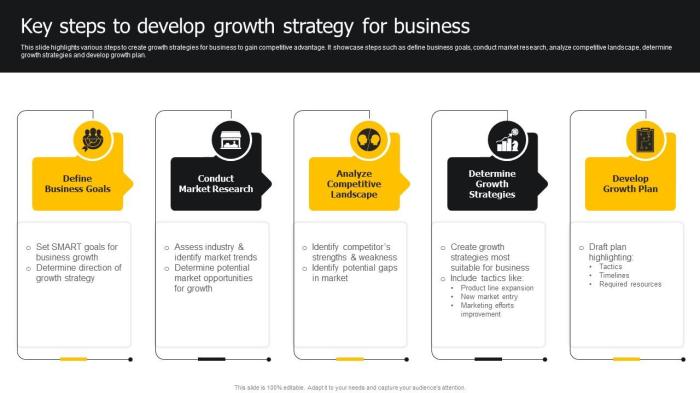
Crafting a strategic plan to facilitate growth is akin to assembling a puzzle; each piece is crucial for forming the bigger picture. Here are detailed steps to create a strategic plan that targets growth objectives effectively:

1. Define Vision and Mission

Establish a clear vision statement that Artikels what you aspire to achieve and a mission statement that encapsulates your purpose. This will serve as the guiding star for all strategic decisions.

2. Conduct a SWOT Analysis

Perform a SWOT analysis to identify your organization’s strengths, weaknesses, opportunities, and threats. This step is vital for understanding where you stand and what potential avenues for growth exist.

3. Set Specific Goals

Define measurable and time-bound growth objectives. For instance, increasing market share by 10% over the next year or launching a new product line within six months. Use the SMART criteria—Specific, Measurable, Achievable, Relevant, Time-bound—as a guiding principle.

4. Develop Strategies

Brainstorm and Artikel strategies to achieve the defined goals. This could include market penetration strategies, new product development, or expanding into new markets. Choose a mix that balances risk and reward effectively.

5. Allocate Resources

Determine the resources needed to implement your strategies, including budget, personnel, and technology. This is like packing your bags for a road trip—you need to ensure you have everything for your journey.

6. Establish Key Performance Indicators (KPIs)

Set KPIs to measure progress toward your growth objectives. This will help in tracking success and making necessary adjustments along the way.

7. Review and Adjust

The business landscape is always changing, so regularly review your strategic plan and be ready to pivot as needed. Think of it as recalibrating your GPS when you hit a detour—staying on course is essential!

The best way to predict the future is to create it.

Marketing Strategies for Growth

Growth business strategies vector concept royalty

In the fast-paced world of business, marketing strategies are the secret sauce that can transform a humble startup into a colossal enterprise – like turning a potato into a French fry empire! Successful marketing strategies can boost brand visibility, enhance customer engagement, and ultimately drive growth. It’s not just about shouting louder than the competition; it’s about creating a symphony that resonates with your target audience.

An effective marketing strategy combines creativity, data, and a sprinkle of humor to engage customers and keep them coming back for more. Digital marketing techniques, in particular, have become indispensable in today’s tech-savvy environment. Let’s dive into the digital deep end and explore how these strategies can elevate your business.

Digital Marketing Techniques for Enhanced Visibility

To stand out in the digital marketplace, businesses must adopt a multi-faceted approach to marketing that includes a variety of techniques. The following are essential components of a robust digital marketing plan that can significantly enhance your visibility online:

  • Search Engine Optimization (): Think of as the friendly assistant that helps your business stand out on Google. By optimizing your content with relevant s, you can boost your visibility and attract organic traffic. Remember, the first page of Google is like the VIP lounge – you want to be on that list!
  • Content Marketing: Crafting engaging and informative content is like hosting a never-ending party where everyone wants to be. Blogs, videos, podcasts, and infographics provide value to your audience, showcasing your expertise and keeping your brand top-of-mind.
  • Social Media Marketing: Social media platforms are the town squares of the digital age. Use them to share your stories, connect with customers, and build a community around your brand. Engaging posts, live videos, and even memes can create a buzz that drives traffic to your business.
  • Email Marketing: Email is like the postman who delivers goodies directly to your customers’ inboxes. With personalized campaigns and well-timed messages, you can keep your audience informed and encourage repeat business, transforming casual browsers into loyal customers.
  • Pay-Per-Click Advertising (PPC): Want to jump straight to the front of the line? PPC allows you to target specific audiences with ads that appear on search engines and social media. It’s like having a magical wand that makes your brand visible to those who are already interested in what you offer.

“Marketing is no longer about the stuff you make but about the stories you tell.” – Seth Godin

Companies like Dollar Shave Club have become household names through innovative marketing strategies. Their humorous video campaign showcased the convenience of their subscription service, going viral and driving massive growth. Similarly, Airbnb used user-generated content to build trust and authenticity, encouraging travelers to share their experiences and expand their reach exponentially. These examples illustrate that a dash of creativity and a sprinkle of humor can lead to remarkable growth in the marketplace.

Financial Management for Scaling Up

Business growth strategies

As a business embarks on the exhilarating journey of scaling up, financial management becomes the trusty compass guiding the way through uncharted waters. This section dives into the essential financial practices that can help a business grow sustainably, ensuring that the ship doesn’t sink under the weight of its own ambitions. Keeping a close eye on finances can mean the difference between thriving and merely surviving in the bustling marketplace.

Essential Financial Management Practices

Effective financial management during growth phases is akin to having a sturdy lifeboat on a choppy sea: it’s a lifesaver! Businesses must implement practices that monitor cash flow, control costs, and ensure investment in growth opportunities. Here are key practices that can be beneficial:

  • Cash Flow Forecasting: This involves predicting future financial liquidity by estimating incoming and outgoing cash. A good forecast helps prepare for lean months and seize growth opportunities, acting like a crystal ball for your finances.
  • Cost Control: Identifying and managing costs ensures that the business doesn’t unintentionally spend like a kid in a candy store. This means regularly reviewing expenses and finding ways to reduce them without sacrificing quality.
  • Financial Ratios Analysis: Understanding ratios like ROI (Return on Investment) and profit margins provides insights into financial health. It’s like having a financial GPS that keeps you on the right path.

Comparing Traditional and Modern Funding Options

When it comes to funding options, businesses find themselves at a buffet of choices, from traditional loans that require a suit and tie to modern crowdfunding platforms that feel like a friendly neighborhood bake sale. Each option has its own flavor and benefits. Here’s a comparison:

  • Traditional Funding: This includes bank loans and venture capital. While they provide substantial amounts, they often come with lengthy processes and collateral requirements. It’s like asking for a favor from your rich uncle with a side of paperwork.
  • Modern Funding: Crowdfunding, peer-to-peer lending, and equity crowdfunding are the new kids on the block. They allow businesses to raise smaller amounts from a larger number of people. This can also create a loyal customer base. It’s almost like organizing a community potluck instead of a formal dinner.

Budgeting Techniques for Growth Optimization

Budgeting during growth phases is crucial, as it ensures that resources are utilized efficiently and effectively. Imagine trying to build a skyscraper without a blueprint—chaos ensues! Here are some budgeting techniques that can optimize resources:

  • Zero-Based Budgeting: Every expense must be justified for each new period, as if starting from scratch. This technique prevents needless expenses from creeping in like uninvited guests at a party.
  • Flexible Budgeting: This allows adjustments based on changes in activity levels. It’s like wearing stretchy pants during the holidays—better equipped to handle unexpected feasts!
  • Percentage of Revenue Budgeting: Allocate certain percentages of revenue to various expenses, ensuring that as revenue grows, so does the budget for growth initiatives. This method keeps spending in check while still allowing for expansion, a bit like growing with grace!

“Effective financial management is not just about keeping the lights on; it’s about turning them into a disco ball for a fantastic growth party!”

Closing Notes

As we reach the end of our adventure through the jungle of Business growth strategies, remember that every giant redwood started as a tiny seed, nurtured by careful planning, clever marketing, and savvy financial moves. With the right tools in your backpack, you can cultivate your business garden into an unstoppable force of nature. Now go forth and make your business bloom!

Questions and Answers

What is the first step in strategic planning?

The first step is to define your business’s mission and vision, setting the foundation for your strategic goals.

How can marketing strategies differ for startups vs. established businesses?

Startups often focus on brand awareness and audience building, whereas established businesses may concentrate on customer retention and expanding market share.

What role does budgeting play in business growth?

Budgeting helps you allocate resources effectively, ensuring you have enough funds for growth initiatives while avoiding financial pitfalls.

Can small businesses use the same growth strategies as large corporations?

Yes, many strategies can be scaled down for small businesses, but the execution may differ based on resources and market reach.

How often should a business revisit its growth strategy?

A business should review its growth strategy at least annually or whenever there are significant market changes or internal shifts.