Startup funding tips for turning dreams into dollars

Startup funding legalraasta raise capital options

Startup funding tips is like a treasure map for entrepreneurs, guiding you through the exciting jungle of cash flow and investment opportunities. Imagine your startup as a daring adventurer, ready to conquer the world but in desperate need of some shiny coins to get started. With various stages of funding, ranging from seed money to venture capital, and a plethora of potential investors out there, this guide will help you navigate through the wilderness so you can unlock the vault of success.

Let’s dive into the depths of startup funding by understanding the stages and sources of funding available. We’ll also uncover the golden criteria that investors are looking for, so you can woo them like a true Casanova of the business world. And don’t worry—whether you’re polishing your pitch or learning the art of financial management, we’ve got tips that will have you swimming in funds instead of floundering.

Understanding Startup Funding

Startup funding tips

Funding might seem as mystical and intimidating as a unicorn flying through a cloud of confetti, but fear not! It’s actually a structured pathway filled with exciting opportunities and a sprinkle of chaos. Understanding startup funding is crucial for any entrepreneur ready to dive into the thrilling world of business. This guide will illuminate the stages, sources, and criteria of funding in a way that even your pet goldfish could understand—though we recommend consulting a human for any serious decisions.

Stages of Startup Funding

Startup funding often progresses through defined stages, each with its own significance and purpose on the road to success. Recognizing these stages can help entrepreneurs strategically approach potential investors.

  • Pre-Seed: This is the embryonic stage where ideas are still in the brainstorming phase. Funding typically comes from founders, friends, and family. Visualize it as planting a seed in a pot and hoping it grows into a money tree.
  • Seed Stage: At this point, entrepreneurs might seek small amounts of capital to develop their product or service. Think of it as watering that seed so it can sprout. Funding sources include angel investors and crowdfunding platforms.
  • Series A: Now the startup is ready to show its potential. This stage often involves larger investments to optimize the product and scale operations. It’s like upgrading from a tricycle to a motorcycle—speed and performance are key!
  • Series B and Beyond: As the business grows, further funding rounds occur to expand into new markets or develop new products. This stage is akin to receiving a golden ticket—more resources mean more possibilities!

Common Sources of Startup Funding

Entrepreneurs have various avenues to pursue when searching for funding, each with its unique flavor and appeal. Understanding these sources is essential for making informed choices that align with the startup’s vision.

  • Bootstrapping: This involves funding the business from personal savings or revenues. It’s like assembling furniture from IKEA—challenging but fulfilling when you see the final product!
  • Angel Investors: These individuals provide capital in exchange for convertible debt or ownership equity. They often come bearing expertise and a network—like a wise wizard with a bag of magical goodies.
  • Venture Capitalists (VCs): Professional groups that invest in startups with high growth potential in exchange for equity. They’re like the guardians of the startup realm, ready to help those who show promise.
  • Crowdfunding: Platforms like Kickstarter and Indiegogo allow entrepreneurs to raise small amounts of money from a large number of people. It’s like hosting a community potluck—everyone brings a dish to share!

Criteria Investors Look For Before Funding

Investors often employ a checklist of criteria when evaluating startups for potential funding. These criteria are crucial in determining whether they should part with their hard-earned cash.

  • Market Potential: Investors seek startups that can capture a significant market share. They want to know if your product is the answer to a question they didn’t even know they had.
  • Team Expertise: A strong founding team with the right skills and experience is vital. It’s like assembling the Avengers—each member must contribute to the overall success of the mission.
  • Scalability: Investors look for businesses that can grow quickly without a proportional increase in costs. If your startup has the potential for rapid growth, it’s a “yes, please!” from them.
  • Clear Business Model: A detailed plan showing how the startup will make money is essential. It’s akin to having a treasure map—investors want to know where the gold is buried!

Tips for Securing Funding

Startup funding legalraasta raise capital options

In the wild world of startups, securing funding can feel like trying to catch a greased pig at a county fair—challenging and potentially messy. But with the right strategies, you can turn that slippery endeavor into a winning proposition. Get ready to charm your way into the hearts (and wallets) of investors with these actionable tips that will have them throwing cash your way faster than you can say “unicorn.”

Preparing a Compelling Pitch

Creating a pitch that dazzles investors requires a mix of storytelling, data, and a sprinkle of showmanship. It’s not just about what your startup does; it’s about how you can make them feel like they can’t possibly miss out on your incredible journey. Start by crafting a narrative that highlights your problem-solving prowess. Investors are like great storytellers—they want to know not just that there’s a problem, but how your innovative solution will change the game.

Make it relatable: share your “aha” moment when you realized your startup idea could save the world (or at least a small corner of it). Don’t forget to include hard-hitting data that’ll make investors sit up and take notice. Show them the market size, growth potential, and your unique value proposition. Use visuals to illustrate your points—charts, graphs, and infographics can be more persuasive than a cat meme at a party.Lastly, practice makes pitch-perfect! Rehearse your delivery until you can recite your pitch in your sleep.

And remember, confidence is key. If you can convince yourself that your startup is the next big thing, you’ll have investors second-guessing their morning coffee choices!

Essential Documentation and Information

When wooing investors, having the right documentation is like having the secret sauce to a successful BBQ—essential and mouthwatering! Investors will want to see your business plan, financial projections, and a comprehensive pitch deck that packs a punch.A well-prepared business plan Artikels your vision, mission, and operational strategy. It should detail your market analysis, competitive landscape, and how you plan to make money.

Think of it as your startup’s autobiography, with a clear beginning, middle, and a future that’s bright enough to require sunglasses!Moreover, financial projections are crucial. Show potential investors a roadmap of where you’re headed financially over the next three to five years. This includes revenue forecasts, expenses, and a break-even analysis. A good rule of thumb is: make it realistic, but also compelling enough to light a fire under their investment intentions.Don’t overlook the importance of supporting documents like resumes of your founding team, any letters of intent from potential customers, and legal agreements.

You want to present a picture that’s as clear as a high-definition movie—no blurry edges allowed!

Networking Tactics for Investor Connections

Connecting with potential investors is a bit like dating; it requires charm, persistence, and the ability to read the room. Here are some effective tactics to help you build a network that could lead to that sweet, sweet funding.Start with local startup events, pitch competitions, and industry conferences. These gatherings are like candy shops for entrepreneurs—full of potential investors looking to discover the next great idea.

Make it a point to attend these events not just to pitch, but to listen and learn. Build relationships online through platforms like LinkedIn and Twitter. Engage with potential investors by sharing insightful content, commenting on their posts, and sending personalized messages. Remember, no one likes a cold call; warm up the conversation first!Lastly, consider leveraging your existing network. Ask for introductions and referrals from mentors, fellow entrepreneurs, and even friends.

A trusted introduction can be worth its weight in gold—a glowing recommendation can open doors that you didn’t even know existed.By employing these strategies, you’ll be well on your way to securing the funding you need to turn your startup dreams into reality. Just keep your pitch sharp, your documents in order, and your networking game on point, and you’re bound to make some waves in the startup funding ocean!

Managing Funds Wisely

In the wild world of startups, managing funds is like walking a tightrope while juggling flaming swords – thrilling but fraught with danger. Your hard-earned cash can either be your best friend or your worst enemy, depending on how wisely you wield it. Here are some best practices and pitfalls to avoid that will keep your finances in check and your investors smiling.

Best Practices for Budgeting and Financial Management

Prioritizing effective budgeting and financial management ensures that every penny counts. Startups often operate in a fog of excitement, but a clear budget is your compass. Here are key practices that can help:

  • Establish a realistic budget that aligns with your business goals and forecast your expenses and revenue accurately.
  • Monitor cash flow regularly to identify trends and adjust your strategies in real-time.
  • Utilize financial management software to keep things organized; think of it as your financial superhero, swooping in to save the day.
  • Keep a reserve fund for unexpected expenses. It’s like having a secret stash of snacks for when the afternoon slump hits.

Avoiding Potential Pitfalls in Fund Management

Even the savviest entrepreneurs can stumble if they’re not careful. Recognizing and avoiding common pitfalls is crucial for long-term sustainability. Here are some traps you can dodge:

  • Refrain from overspending on unnecessary perks; a ping pong table won’t save your startup if you can’t pay the rent.
  • Avoid mixing personal and business finances, or you might find yourself in a financial blender. Keep it clean and separate!
  • Don’t ignore financial reporting; lack of visibility can lead to misguided decision-making. Transparency is key, not only for you but also for your investors.

The Importance of Transparent Financial Reporting to Investors

Transparency builds trust, and in the startup world, trust is a currency of its own. Investors want to see where their money is going and how it’s being utilized. Here’s why transparent reporting matters:

  • It fosters a strong relationship with investors, showing them you value their trust and investment.
  • Regular updates can alert you to financial issues before they spiral out of control, like a smoke alarm for your finances.
  • Transparency can attract more investors; think of it as a magnet for credibility, drawing in those who appreciate openness.
  • Clear financial reports can help you make informed decisions on scaling, hiring, or cutting back, ensuring your startup doesn’t end up like a deer in headlights.

“In God we trust; all others bring data.” – W. Edwards Deming

Last Recap

In this wild ride through the world of startup funding, we’ve uncovered the secrets to securing that much-needed financial boost. From crafting an irresistible pitch to managing your newfound treasure wisely, you now have the tools to enchant investors and keep your financial ship sailing smoothly. Remember, with the right preparation and a sprinkle of charm, you can turn those dreams of entrepreneurial glory into a reality filled with adventure and profit.

Now go forth and conquer the funding landscape—your startup empire awaits!

Q&A

What are the main types of startup funding?

There are several types, including bootstrapping, angel investors, venture capital, crowdfunding, and government grants.

How can I improve my pitch to investors?

Focus on clarity, telling a compelling story, demonstrating market potential, and showcasing a strong team.

What documents do I need to secure funding?

Common documents include a business plan, financial projections, pitch deck, and legal documents relevant to your startup.

How do I manage funds effectively once I secure them?

Implement a strict budgeting process, monitor cash flow closely, and maintain transparent financial reporting with stakeholders.

What should I avoid while managing startup funds?

Avoid overspending, poor forecasting, and lack of communication with investors about financial health.
Business growth strategies for a booming future

Business growth strategies

Starting with Business growth strategies, picture this: your business is a garden, and you’re holding the watering can of strategic planning, marketing magic, and financial finesse. The sun is shining, and with the right tactics, your profits could blossom like daisies! Let’s dig into how these strategies can turn your entrepreneurial weeds into a forest of success.

In this journey, we’ll uncover the treasure map of strategic planning, marketing maneuvers that leave your competitors in the dust, and financial management tips that aren’t just about counting pennies but making them multiply. Buckle up; it’s going to be a wild ride through the world of business growth!

Strategic Planning for Business Growth

In the grand theater of business, strategic planning is the script that sets the stage for growth, allowing companies to plot their course through the unpredictable seas of the market. It’s the GPS for navigating the twists and turns of competition, customer needs, and economic changes, ensuring businesses don’t just float aimlessly but sail toward success with style and purpose.

Strategic planning is essential for business growth because it provides direction and a framework for making informed decisions. Without a plan, businesses risk becoming like a ship without a rudder, drifting toward uncertainty. Models such as SWOT analysis, the Balanced Scorecard, and Porter’s Five Forces can help organizations assess their strengths, weaknesses, opportunities, and threats while aligning their activities with overall business goals.

Models of Strategic Planning for Growth

When it comes to steering a business toward growth, various strategic planning models can be like a buffet of options—each with its own unique flavor and benefits. Here are some popular models that businesses can feast on:

  • SWOT Analysis: This model allows businesses to identify their internal strengths and weaknesses, as well as external opportunities and threats. Picture it as a self-reflection exercise for companies, helping them to recognize their superpowers and kryptonite.
  • Balanced Scorecard: Developed by Kaplan and Norton, this model emphasizes measuring performance from multiple perspectives: financial, customer, internal processes, and learning and growth. It’s like having a 360-degree view of your business’s health.
  • Porter’s Five Forces: This framework analyzes the competitive environment, evaluating factors like the threat of new entrants and the bargaining power of suppliers. It’s akin to a strategic battle plan, helping businesses understand the battlefield before charging in.
  • PESTLE Analysis: Examining Political, Economic, Social, Technological, Legal, and Environmental factors, this model helps businesses grasp the macro-environmental factors affecting growth. Think of it as scouting the terrain before embarking on a journey.

Steps to Create a Strategic Plan Focused on Growth Objectives

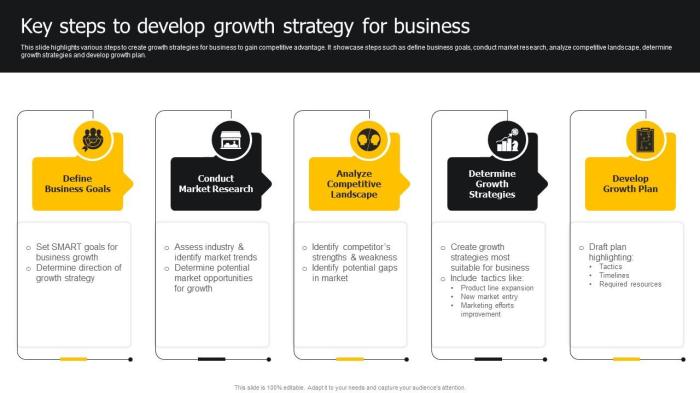
Crafting a strategic plan to facilitate growth is akin to assembling a puzzle; each piece is crucial for forming the bigger picture. Here are detailed steps to create a strategic plan that targets growth objectives effectively:

1. Define Vision and Mission

Establish a clear vision statement that Artikels what you aspire to achieve and a mission statement that encapsulates your purpose. This will serve as the guiding star for all strategic decisions.

2. Conduct a SWOT Analysis

Perform a SWOT analysis to identify your organization’s strengths, weaknesses, opportunities, and threats. This step is vital for understanding where you stand and what potential avenues for growth exist.

3. Set Specific Goals

Define measurable and time-bound growth objectives. For instance, increasing market share by 10% over the next year or launching a new product line within six months. Use the SMART criteria—Specific, Measurable, Achievable, Relevant, Time-bound—as a guiding principle.

4. Develop Strategies

Brainstorm and Artikel strategies to achieve the defined goals. This could include market penetration strategies, new product development, or expanding into new markets. Choose a mix that balances risk and reward effectively.

5. Allocate Resources

Determine the resources needed to implement your strategies, including budget, personnel, and technology. This is like packing your bags for a road trip—you need to ensure you have everything for your journey.

6. Establish Key Performance Indicators (KPIs)

Set KPIs to measure progress toward your growth objectives. This will help in tracking success and making necessary adjustments along the way.

7. Review and Adjust

The business landscape is always changing, so regularly review your strategic plan and be ready to pivot as needed. Think of it as recalibrating your GPS when you hit a detour—staying on course is essential!

The best way to predict the future is to create it.

Marketing Strategies for Growth

Growth business strategies vector concept royalty

In the fast-paced world of business, marketing strategies are the secret sauce that can transform a humble startup into a colossal enterprise – like turning a potato into a French fry empire! Successful marketing strategies can boost brand visibility, enhance customer engagement, and ultimately drive growth. It’s not just about shouting louder than the competition; it’s about creating a symphony that resonates with your target audience.

An effective marketing strategy combines creativity, data, and a sprinkle of humor to engage customers and keep them coming back for more. Digital marketing techniques, in particular, have become indispensable in today’s tech-savvy environment. Let’s dive into the digital deep end and explore how these strategies can elevate your business.

Digital Marketing Techniques for Enhanced Visibility

To stand out in the digital marketplace, businesses must adopt a multi-faceted approach to marketing that includes a variety of techniques. The following are essential components of a robust digital marketing plan that can significantly enhance your visibility online:

  • Search Engine Optimization (): Think of as the friendly assistant that helps your business stand out on Google. By optimizing your content with relevant s, you can boost your visibility and attract organic traffic. Remember, the first page of Google is like the VIP lounge – you want to be on that list!
  • Content Marketing: Crafting engaging and informative content is like hosting a never-ending party where everyone wants to be. Blogs, videos, podcasts, and infographics provide value to your audience, showcasing your expertise and keeping your brand top-of-mind.
  • Social Media Marketing: Social media platforms are the town squares of the digital age. Use them to share your stories, connect with customers, and build a community around your brand. Engaging posts, live videos, and even memes can create a buzz that drives traffic to your business.
  • Email Marketing: Email is like the postman who delivers goodies directly to your customers’ inboxes. With personalized campaigns and well-timed messages, you can keep your audience informed and encourage repeat business, transforming casual browsers into loyal customers.
  • Pay-Per-Click Advertising (PPC): Want to jump straight to the front of the line? PPC allows you to target specific audiences with ads that appear on search engines and social media. It’s like having a magical wand that makes your brand visible to those who are already interested in what you offer.

“Marketing is no longer about the stuff you make but about the stories you tell.” – Seth Godin

Companies like Dollar Shave Club have become household names through innovative marketing strategies. Their humorous video campaign showcased the convenience of their subscription service, going viral and driving massive growth. Similarly, Airbnb used user-generated content to build trust and authenticity, encouraging travelers to share their experiences and expand their reach exponentially. These examples illustrate that a dash of creativity and a sprinkle of humor can lead to remarkable growth in the marketplace.

Financial Management for Scaling Up

Business growth strategies

As a business embarks on the exhilarating journey of scaling up, financial management becomes the trusty compass guiding the way through uncharted waters. This section dives into the essential financial practices that can help a business grow sustainably, ensuring that the ship doesn’t sink under the weight of its own ambitions. Keeping a close eye on finances can mean the difference between thriving and merely surviving in the bustling marketplace.

Essential Financial Management Practices

Effective financial management during growth phases is akin to having a sturdy lifeboat on a choppy sea: it’s a lifesaver! Businesses must implement practices that monitor cash flow, control costs, and ensure investment in growth opportunities. Here are key practices that can be beneficial:

  • Cash Flow Forecasting: This involves predicting future financial liquidity by estimating incoming and outgoing cash. A good forecast helps prepare for lean months and seize growth opportunities, acting like a crystal ball for your finances.
  • Cost Control: Identifying and managing costs ensures that the business doesn’t unintentionally spend like a kid in a candy store. This means regularly reviewing expenses and finding ways to reduce them without sacrificing quality.
  • Financial Ratios Analysis: Understanding ratios like ROI (Return on Investment) and profit margins provides insights into financial health. It’s like having a financial GPS that keeps you on the right path.

Comparing Traditional and Modern Funding Options

When it comes to funding options, businesses find themselves at a buffet of choices, from traditional loans that require a suit and tie to modern crowdfunding platforms that feel like a friendly neighborhood bake sale. Each option has its own flavor and benefits. Here’s a comparison:

  • Traditional Funding: This includes bank loans and venture capital. While they provide substantial amounts, they often come with lengthy processes and collateral requirements. It’s like asking for a favor from your rich uncle with a side of paperwork.
  • Modern Funding: Crowdfunding, peer-to-peer lending, and equity crowdfunding are the new kids on the block. They allow businesses to raise smaller amounts from a larger number of people. This can also create a loyal customer base. It’s almost like organizing a community potluck instead of a formal dinner.

Budgeting Techniques for Growth Optimization

Budgeting during growth phases is crucial, as it ensures that resources are utilized efficiently and effectively. Imagine trying to build a skyscraper without a blueprint—chaos ensues! Here are some budgeting techniques that can optimize resources:

  • Zero-Based Budgeting: Every expense must be justified for each new period, as if starting from scratch. This technique prevents needless expenses from creeping in like uninvited guests at a party.
  • Flexible Budgeting: This allows adjustments based on changes in activity levels. It’s like wearing stretchy pants during the holidays—better equipped to handle unexpected feasts!
  • Percentage of Revenue Budgeting: Allocate certain percentages of revenue to various expenses, ensuring that as revenue grows, so does the budget for growth initiatives. This method keeps spending in check while still allowing for expansion, a bit like growing with grace!

“Effective financial management is not just about keeping the lights on; it’s about turning them into a disco ball for a fantastic growth party!”

Closing Notes

As we reach the end of our adventure through the jungle of Business growth strategies, remember that every giant redwood started as a tiny seed, nurtured by careful planning, clever marketing, and savvy financial moves. With the right tools in your backpack, you can cultivate your business garden into an unstoppable force of nature. Now go forth and make your business bloom!

Questions and Answers

What is the first step in strategic planning?

The first step is to define your business’s mission and vision, setting the foundation for your strategic goals.

How can marketing strategies differ for startups vs. established businesses?

Startups often focus on brand awareness and audience building, whereas established businesses may concentrate on customer retention and expanding market share.

What role does budgeting play in business growth?

Budgeting helps you allocate resources effectively, ensuring you have enough funds for growth initiatives while avoiding financial pitfalls.

Can small businesses use the same growth strategies as large corporations?

Yes, many strategies can be scaled down for small businesses, but the execution may differ based on resources and market reach.

How often should a business revisit its growth strategy?

A business should review its growth strategy at least annually or whenever there are significant market changes or internal shifts.